
Robert Wright is simultaneously brilliant, but occasionally (and humorously) off putting in his manner. By his own admission, his book title is rather grandiose- He even stated jokily in an interview that he is constantly trying to outdo each book title compared to the last. I think he achieved it with this one.
But the title is kind of misleading as, rather than some whacked out doctrine with shady pop psychology “science” propping up claims of superiority of one particular religion over another, this is the complete antidote to such stuff.
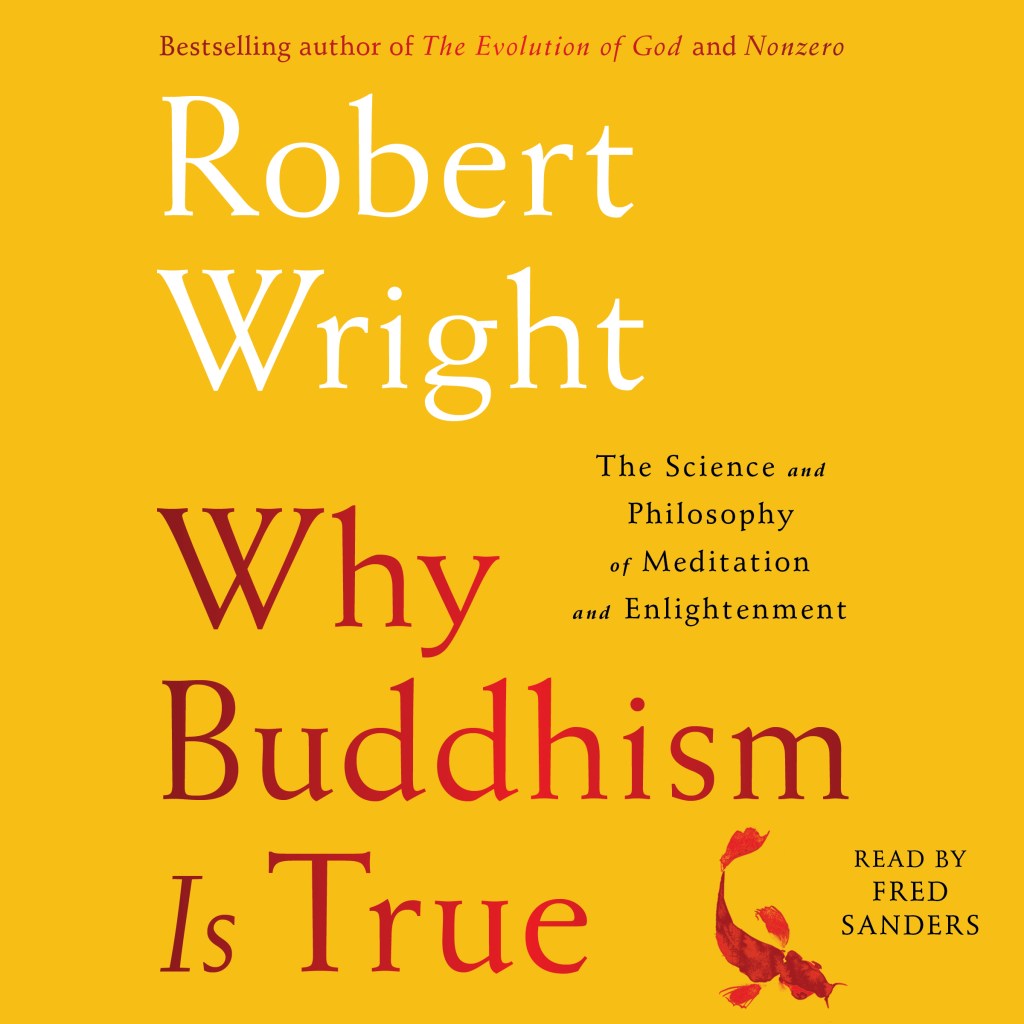
“Why Buddhism Is True” looks at the neuroscience behind practices such as mindfulness meditation, stress and how we are wired to respond to the external world. He also explains- in incredibly accessible terms- the recent resoundingly positive scientific findings of meditation’s effects on our brains, through the lens of evolutionary psychology, rather than any religious dogma.
Now, I love biomechanics, so I am also incredibly interested in evolutionary psychology. They go hand in hand in explaining a broader holistic picture of how humans are the way we are, in terms of our movements, responses, needs and behaviours today in a modern environment. Basically- Why are we generally so fucked up and dissatisfied?
The rise of “Secular Buddhism” has been divisive for many reasons, but this book somehow manages to bridge the two worlds effortlessly, written by an evolutionary psychologist who is a regular practitioner of Vipassana meditation which is one of the oldest Buddhist meditation practices. This kind of meditation doesn’t rely on chanting or anything else that other schools of more ritual-driven paths of Buddhism subscribe to. So as a result, it’s pretty accessible to anyone of any faith, technically. And that includes those with no particular faith at all.
This book was originally published in 2017, but I was a little late to the party and read it during lockdown in early 2020. I’m so glad I did as it was exactly the kind of nourishment for the mind that I needed. And he is funny as fuck, too. He knows his own personality and doesn’t shy away from awkwardness or self-examination, so it’s an incredibly relatable read.
You don’t get the sense that you’re being lectured to by some enlightened New York Times Bestseller knobhead who’s way better than you.
You’re being given valuable information by a flawed human just like yourself, but one who has really put in the time and the work to find some absolute gems for us to consider.
You really should read this book, especially if you’re someone who has maybe struggled with maintaining a meditation practice in the past, or have wanted to start meditating for your mental health, but been put off by the religious aspect.
It’s also of interest if you are just keen on knowing more about how everything connects and how our evolutionary brains struggle with modern life and demands.
I’m reviewing it now, because it’s a book I keep coming back to. It will always feel relevant and vital.
 The Mindful Metalhead
Leave a comment